Overview
Table of Contents Hide
- Search is shifting from keyword-based rankings to intent-driven, AI-powered results that prioritize clear, authoritative answers.
As users adopt conversational and zero-click search behavior, content must focus on context, depth, and topical relevance rather than keyword matching.- Businesses that adapt their SEO strategies to these changes improve visibility, authority, and long-term organic growth.
Keywords are no longer the main driver of search rankings. Today, success depends more on delivering clear, high-value answers that address user intent, as AI-powered search systems prioritize semantic relevance and contextual meaning over exact-match phrases.
Understanding how search behavior is shifting from keywords to answers is essential if you want to remain competitive in modern search results. As intent-based ranking systems continue to reshape SEO, brands need strategies built around authority and topical depth.
At SEO Hacker, we help companies across different industries adapt to these changes through search-focused strategies designed for sustainable organic growth. Continue reading to understand how this shift impacts modern content strategies.
Core Shifts in Search Behavior
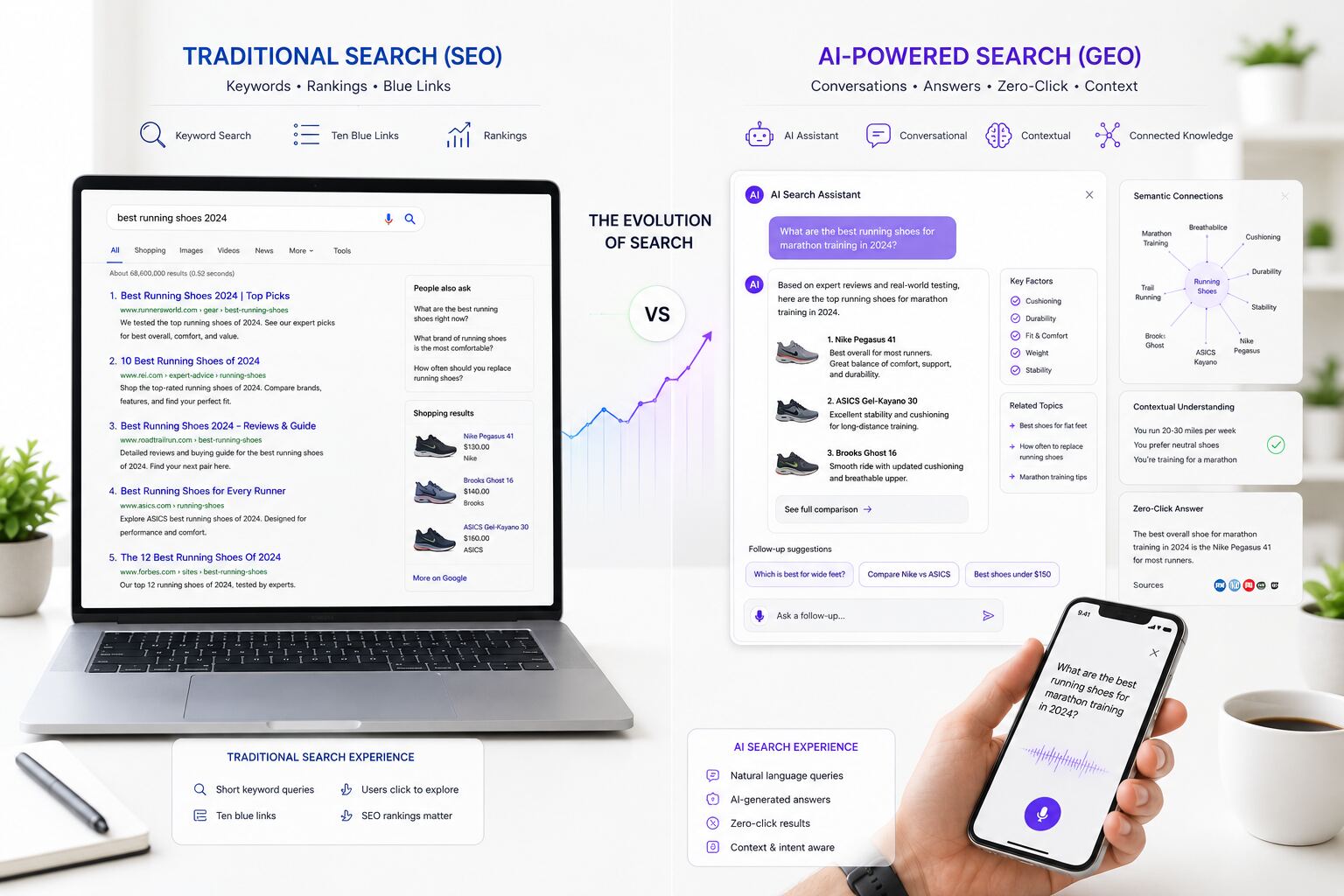
Search behavior is moving toward intent-driven discovery instead of isolated keyword matching. Users now expect search engines to understand the why behind their search and what kind of answer they actually need before presenting results.
Keywords to Conversation
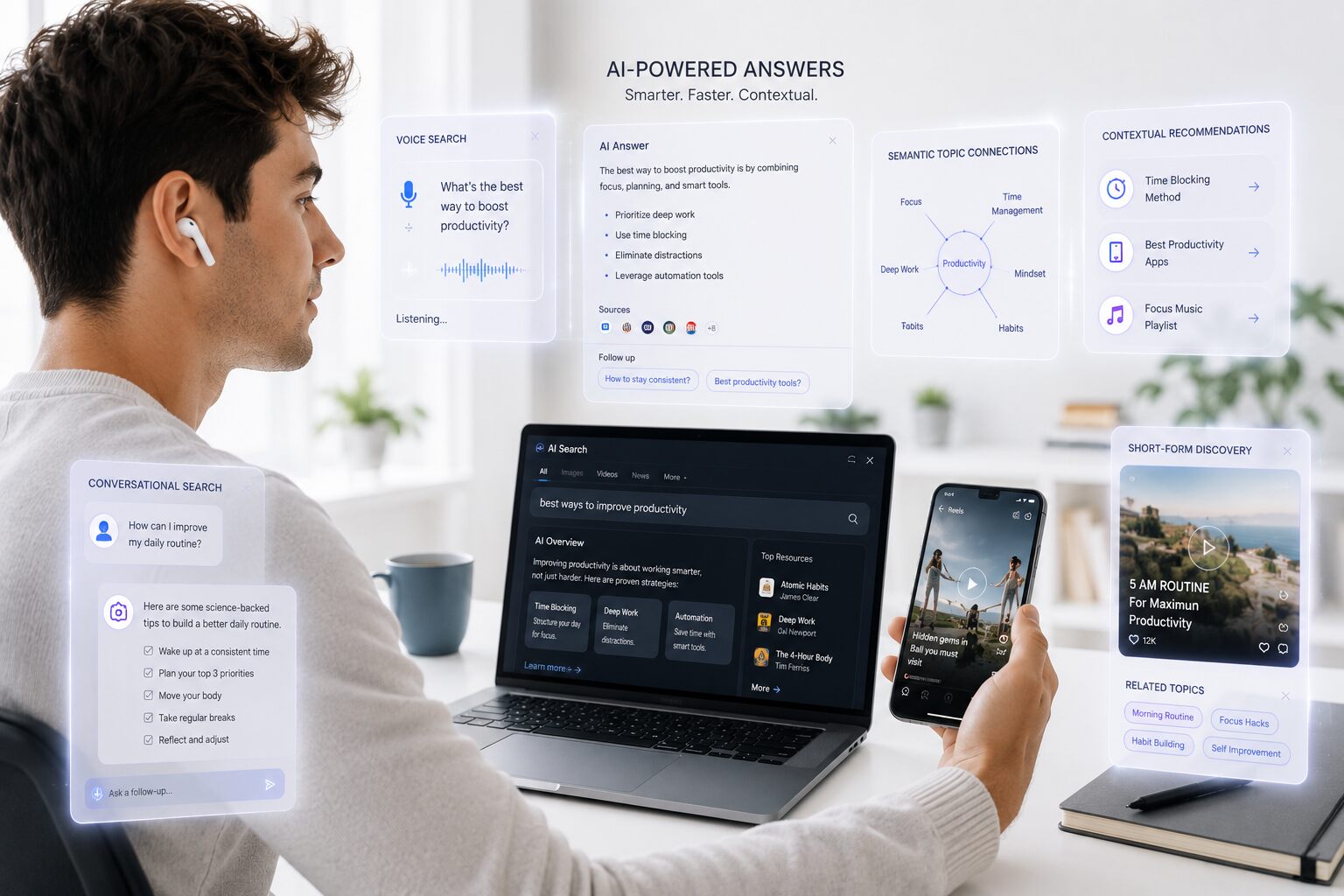
Users now prefer asking full, complex questions instead of typing disconnected keywords. Modern AI models break a single query into multiple connected subtopics to build more complete and relevant answers. These systems interpret context, intent, and user goals more accurately, making detailed searches far more valuable than short keyword phrases.
This changes how content competes in search results. Pages built only around high-volume keywords often fail to address the deeper questions users actually care about.
With stronger insights in place, marketing teams can create content with enough contextual depth for AI systems to recognize authority across multiple intent layers.
The “Zero-Click” Trend
The zero-click trend refers to searches where users get the information they need directly on the search results page without visiting another site. As of 2026, roughly 60% of searches end without a click, making visibility inside Google’s search environment more valuable than traffic alone.
Search engines are becoming platforms that synthesize information rather than directories for users. AI Overviews pull insights from multiple authoritative sources to generate instant summaries that give them the value they’re looking for.
Businesses that target deeper conversational questions and provide layered expertise are more likely to earn visibility in AI summaries while still attracting clicks from context-seeking users.
Context Over Matching
AI-powered search engines now interpret the intent behind a query. They assess topical relevance and meaning to determine whether content truly answers the question, allowing pages to rank even without exact keyword matching.
While still critical, keyword stuffing has therefore become less effective than it was in the earlier generations of SEO. Modern ranking systems prioritize content that demonstrates expertise and aligns naturally with user expectations across the search journey. If businesses want to position themselves for long-term visibility in AI search results, their content must focus on topical authority and semantic coverage.
Conversational Interfaces
Users now treat search engines more like advisors than tools, asking detailed, conversational questions with context and intent. Multi-turn interactions also allow them to refine queries naturally without starting over each time.
AI Overviews now function like personalized recommendation systems that summarize options and narrow decisions quickly within a single interaction. This shortens the traditional research process and allows users to gather insights faster than before. Companies need content that anticipates follow-up questions and provides enough depth to remain valuable after the AI summary appears.
Key Drivers of the Shift
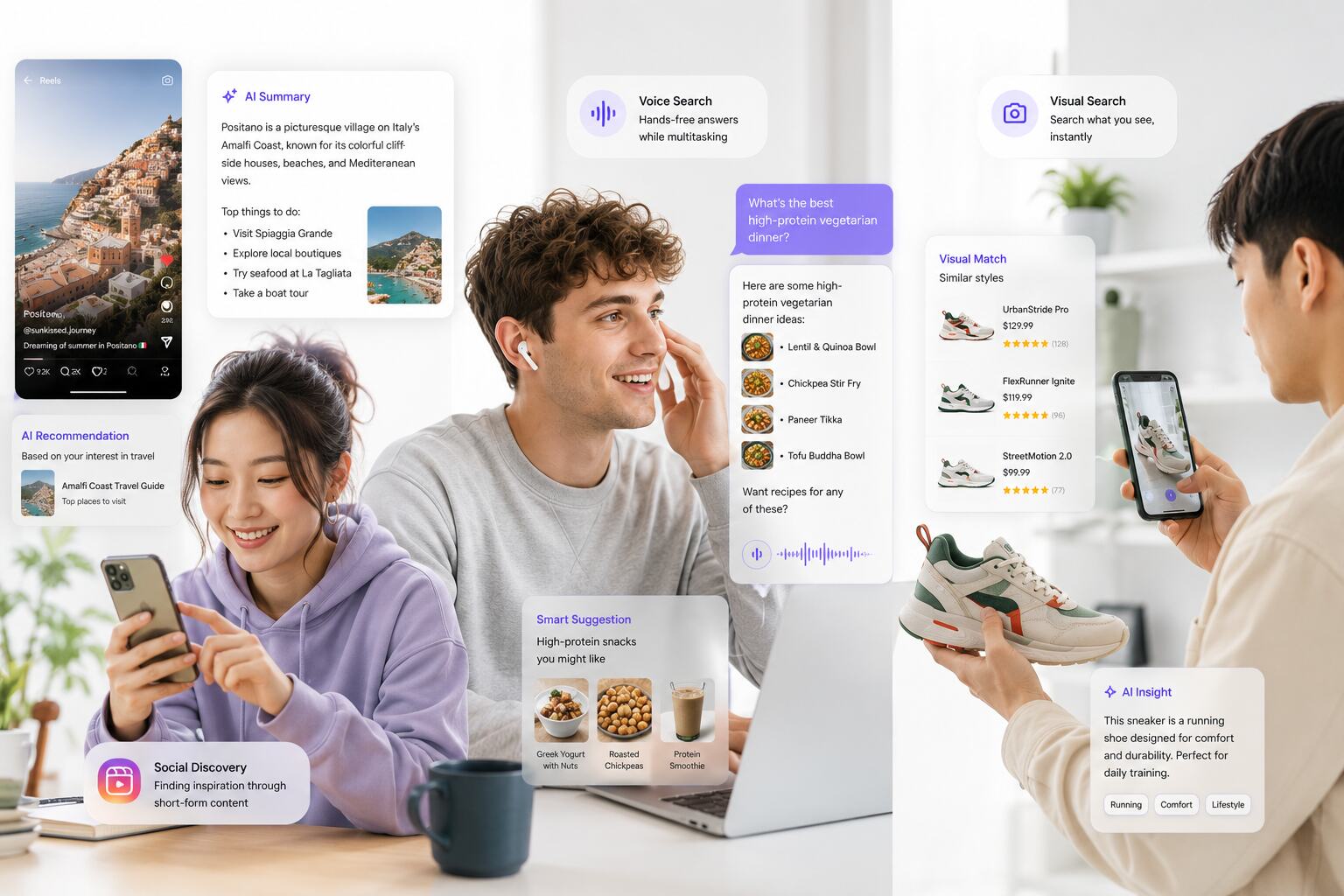
Several major technologies are accelerating the shift from keyword-focused search to answer-driven discoveries. These developments change how search engines process information and how users interact with online content across different platforms.
Generative AI Integration
Google AI Overview changed how users consume search results by providing synthesized answers directly inside the search experience. Instead of reviewing multiple websites individually, users can receive summarized information generated from several authoritative sources immediately after searching.
Generative AI is raising the standard for valuable content. Pages that rely on thin or repetitive keyword usage offer little value, as AI systems prioritize content that supports accurate, reliable answers. As a result, search visibility now favors context-rich content that better addresses deeper user intent.
Mobile and Voice Search
Mobile usage and virtual assistants are reshaping how users interact with search by encouraging natural, spoken language instead of fragmented keywords. Tools like Siri, Alexa, and Google Assistant process full questions in the way they are naturally spoken, which makes conversational queries the default search behavior on mobile devices.
These voice-driven searches carry stronger contextual signals, allowing search engines to deliver more precise answers. As this behavior becomes more common, content that mirrors natural speech patterns becomes more aligned with how users consume information.
Social and Visual Search
Younger audiences increasingly begin searches on platforms like TikTok or through visual tools like Google Lens. Gen Z, in particular, is turning to social media for faster and more interactive ways to explore information. This changes how users evaluate products and services during the research process.
Modern SEO strategies now overlap more closely with content marketing and cross-platform discoverability. With this in mind, businesses that create searchable visual content gain stronger positioning as user behavior evolves.
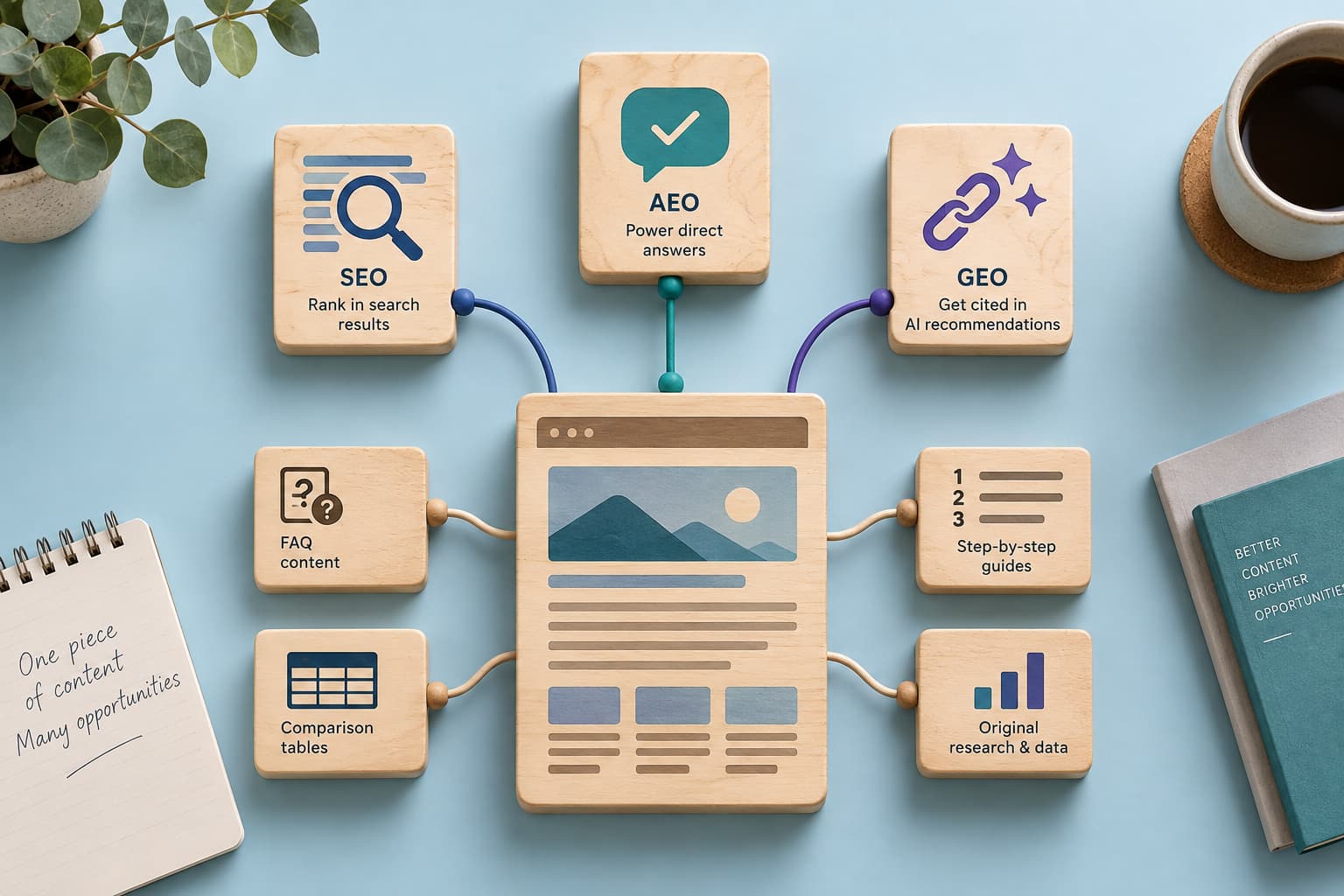
What Does This Mean For Your SEO, AEO, and GEO Strategy?
Search engines increasingly reward content that demonstrates expertise and structured clarity over simple keyword optimization. This shifts content strategy toward building pages that AI systems can quickly surface in response to complex user intent.
To build a better content strategy for modern SEO, you must:
- Prioritize Answer-First Content: Place the main answer at the beginning of the content with thorough detail.
- Target Long-Tail Questions: Focus on creating content that answers specific questions (e.g., “what are the best research practices for students”) instead of short keywords.
- Structure Outlines For AI: Use FAQs and concise data that AI can easily crawl and use for featured snippets.
Key Takeaway
Search visibility is now defined by how effectively content answers intent. Since AI-driven search systems prioritize authority and contextual depth when deciding which content deserves visibility, SEO content creation must evolve to align with modern search behavior.
At SEO Hacker, we understand how search behavior is shifting from keywords to answers. We help businesses across a wide range of industries adapt through intent-driven SEO strategies built for sustained visibility in AI-powered search. Reach out today to stay ahead in competitive search engine marketing.