Overview
- Internal linking strengthens SEO and AEO by improving crawlability, distributing authority, and reinforcing topical relationships across a website.
- Effective strategies include optimizing anchor text, prioritizing contextual links, maintaining a shallow site structure, and conducting regular audits.
- These practices help search engines and AI systems better understand, index, and surface content in search and AI-generated results.
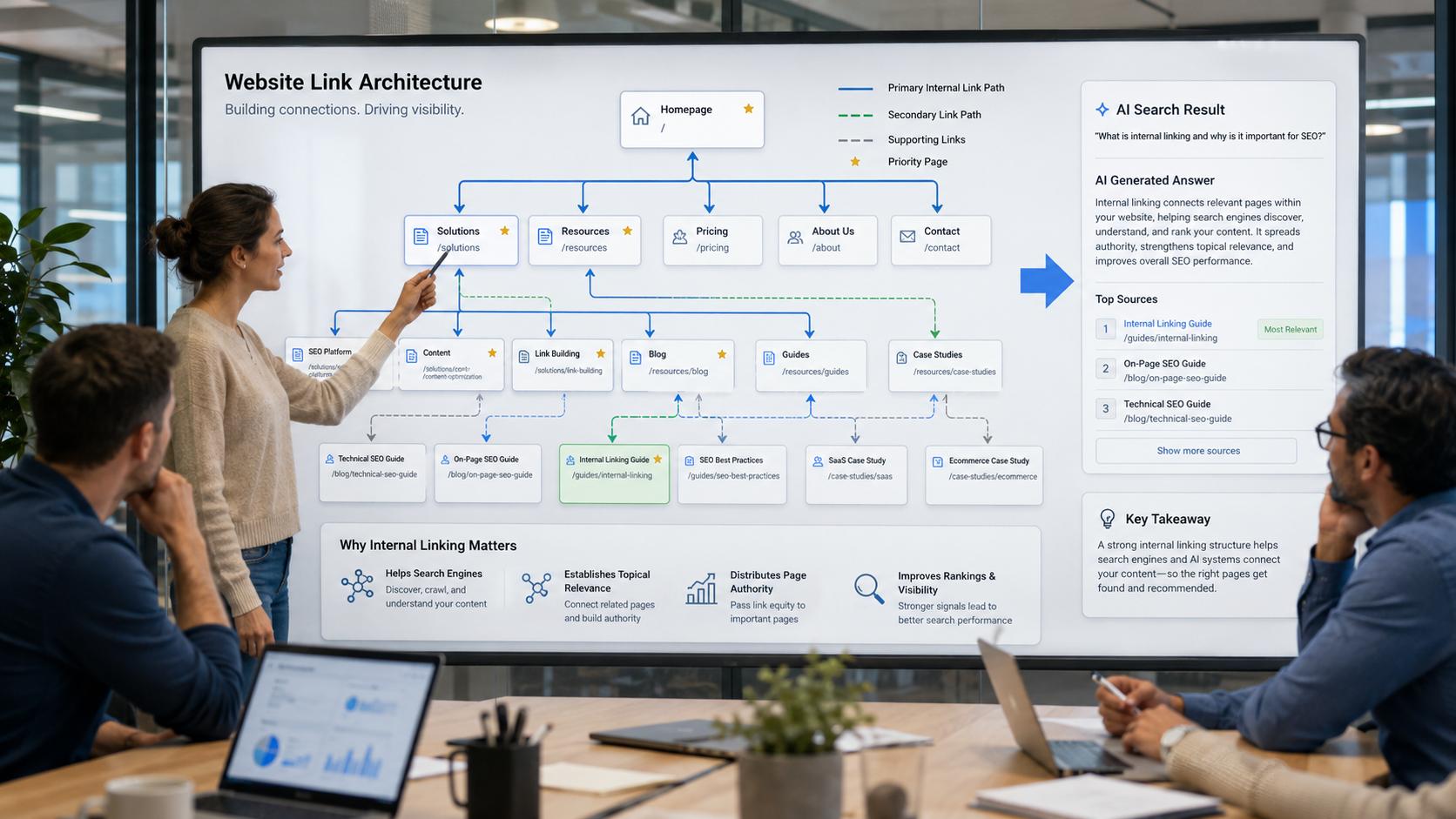
Internal linking connects pages within a website, helping users navigate content and search engines understand the site’s structure. It supports Search Engine Optimization (SEO) by improving crawlability, distributing authority, and showing how pages relate to one another.
When done correctly, internal linking strengthens how both search engines and AI systems interpret content relevance and importance across a website. In this article, we will explore internal linking strategies that strengthen SEO signals for AEO and improve overall search and AI visibility.
How Internal Links Strengthen SEO Signals
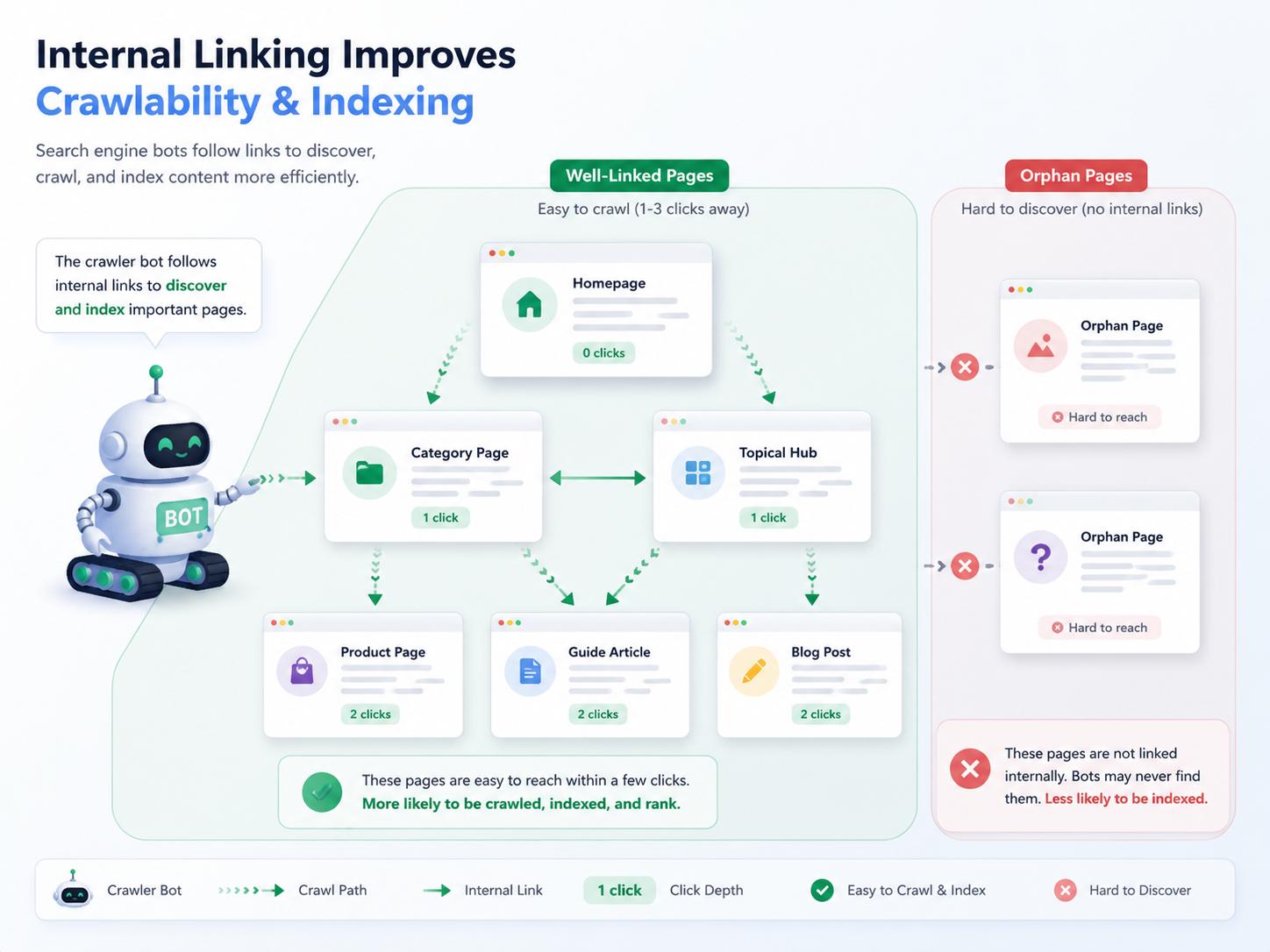
Here’s how internal links directly reinforce SEO performance by helping search engines understand structure, importance, and relationships between pages.
PageRank Distribution
Internal linking distributes authority across your website by passing link equity from high-performing pages to other relevant content. This flow of equity reflects PageRank distribution, where search engines use links to understand page importance and prioritize which pages should rank.
Strategic internal linking allows stronger pages to pass authority to newer or underperforming pages, helping search engines recognize their value. This prevents important pages from becoming isolated and ensures authority is distributed more effectively across the site. As a result, key pages gain better visibility in both search rankings and AI-generated results.
Crawlability & Indexing
Search engine bots discover, crawl, and index important pages more effectively when a website provides clear pathways between related content. Properly interconnected pages allow crawlers to navigate the site efficiently, understand its structure, and prioritize which pages to index.
This reduces the risk of important pages being overlooked or delayed in search results. It also helps new content get discovered faster through existing authority paths.
Weak or fragmented linking can isolate pages, making them harder for search engines and AI systems to find. Improved crawlability supports faster indexing, stronger visibility, and more reliable SEO signals.
Topical Authority
When multiple pages consistently link to and from related content within the same theme, a website signals topical authority by creating a clear subject cluster. Search engines and AI systems interpret this interconnected structure as evidence of expertise and relevance, increasing trust in the site’s coverage of that topic.
As pages gain contextual support from nearby articles, individual posts inherit authority and rank more competitively in answer boxes and SERPs. Without this supporting network, standalone pages struggle to build enough contextual strength, making them less likely to be surfaced by AI-driven answers or prioritized in search results.
How Internal Links Influence AEO (Answer Engine Optimization)
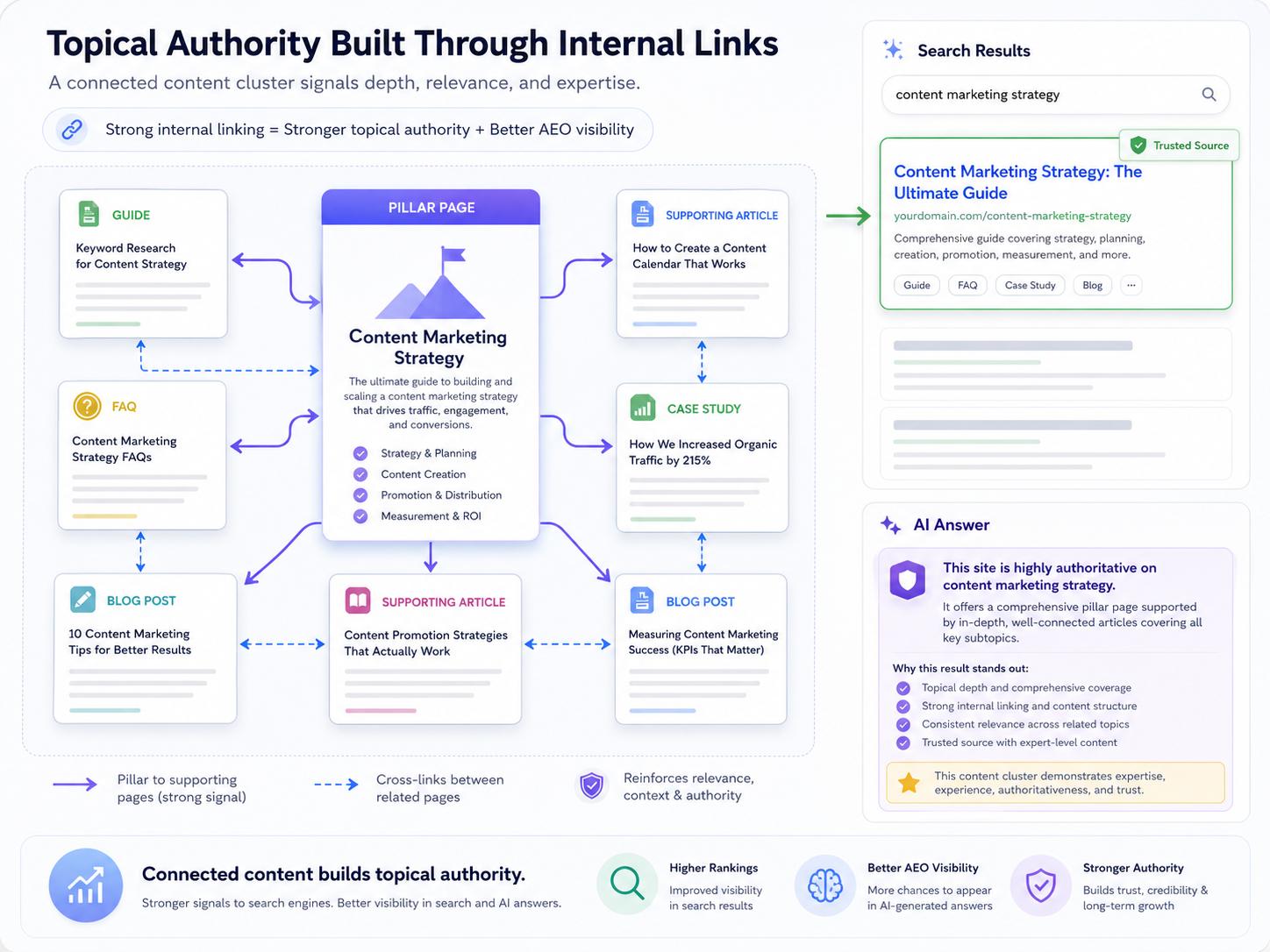
Here’s how internal links help AI systems better understand and surface your content in answer-driven search results.
- AI citations — Linking related pages reinforces authority and content relationships, raising the likelihood that a page will be chosen as a source for AI-generated answers.
- Semantic context — Connections between topic-related pages clarify how concepts relate, improving AI understanding of relevance and helping the system surface more accurate, context-aware responses.
Actionable Best Practices for Internal Linking
The following actionable best practices help strengthen internal linking structures so search engines and AI systems can better understand your content relationships, authority signals, and site hierarchy.
Optimize Anchor Text
Use clear, descriptive phrases that match the page topic instead of generic text like “click here” or overused exact-match keywords. This improves relevance, strengthens connections between pages, and helps AI interpret relationships between content more accurately.
Properly optimized anchor text also improves navigation and increases the likelihood that pages will be indexed, understood, and surfaced in both search results and AI-generated answers.
Prioritize Contextual Links
Contextual links are internal links placed naturally within relevant content. Prioritizing them means adding links within a page’s main discussion that directly support the topic, not in menus or footers. This helps search engines understand how pages are related and strengthens topical signals.
It also guides AI systems in identifying subject depth and relevance. When done correctly, contextual linking improves navigation, supports authority building, and makes it easier for users to find related information. Without it, links feel disconnected and carry less SEO value.
Keep it Shallow
Keeping a site shallow means making important pages accessible within 2–3 clicks from the homepage. You can do this by placing key pages in your main navigation, using clear category pages that link directly to related content, and avoiding deep folder structures.
Support pages should be linked internally rather than buried in subfolders. This setup helps search engines and AI systems find, crawl, and understand your most valuable pages faster and more efficiently.
Audit Regularly
As websites expand, links can become outdated, broken, or poorly connected, making it harder for search engines and AI systems to understand relationships among content. Auditing involves checking for broken links, orphan pages, inconsistent anchor text, and missed linking opportunities.
It also ensures new content is properly connected within the site structure. By reviewing and updating internal links regularly, you maintain a clear, organized structure that improves crawlability, strengthens the flow of authority, and supports better visibility in both search results and AI-generated answers.
Common Internal Linking Mistakes That Weaken SEO Signals
Here are the common internal linking mistakes that make it harder for search engines and AI systems to properly understand your website structure and content relevance.
- Broken internal links – Links that lead to missing pages, disrupting navigation and crawlability.
- Overusing exact-match anchor text – Excessive keyword-heavy anchors that look unnatural and reduce relevance signals.
- Linking irrelevant pages – Connecting unrelated content that weakens topical clarity and confuses search engines.
- Orphan pages – Pages with no internal links, making them hard for search engines and AI to find and index.
How SEO Hacker Improves Internal Linking for AEO
At SEO Hacker, we strengthen internal linking for AEO by creating a clear site structure that improves search visibility and helps AI understand your content. We connect related pages, optimize anchor text, fix broken links, eliminate orphan pages, and enhance site hierarchy. This makes your website easier for search engines and AI systems to crawl, interpret, and surface in relevant results.
Key Takeaway
Strong internal linking strategies that strengthen SEO signals for AEO improve how search engines and AI systems understand, connect, and prioritize content across your website.
A strong internal linking structure improves crawlability, reinforces topic relationships, and distributes authority across your website, helping key pages gain greater visibility and relevance for both search engines and AI-generated results. SEO Hacker can identify linking gaps and optimize your site architecture to strengthen AEO performance. Contact us today to enhance your internal linking strategy.