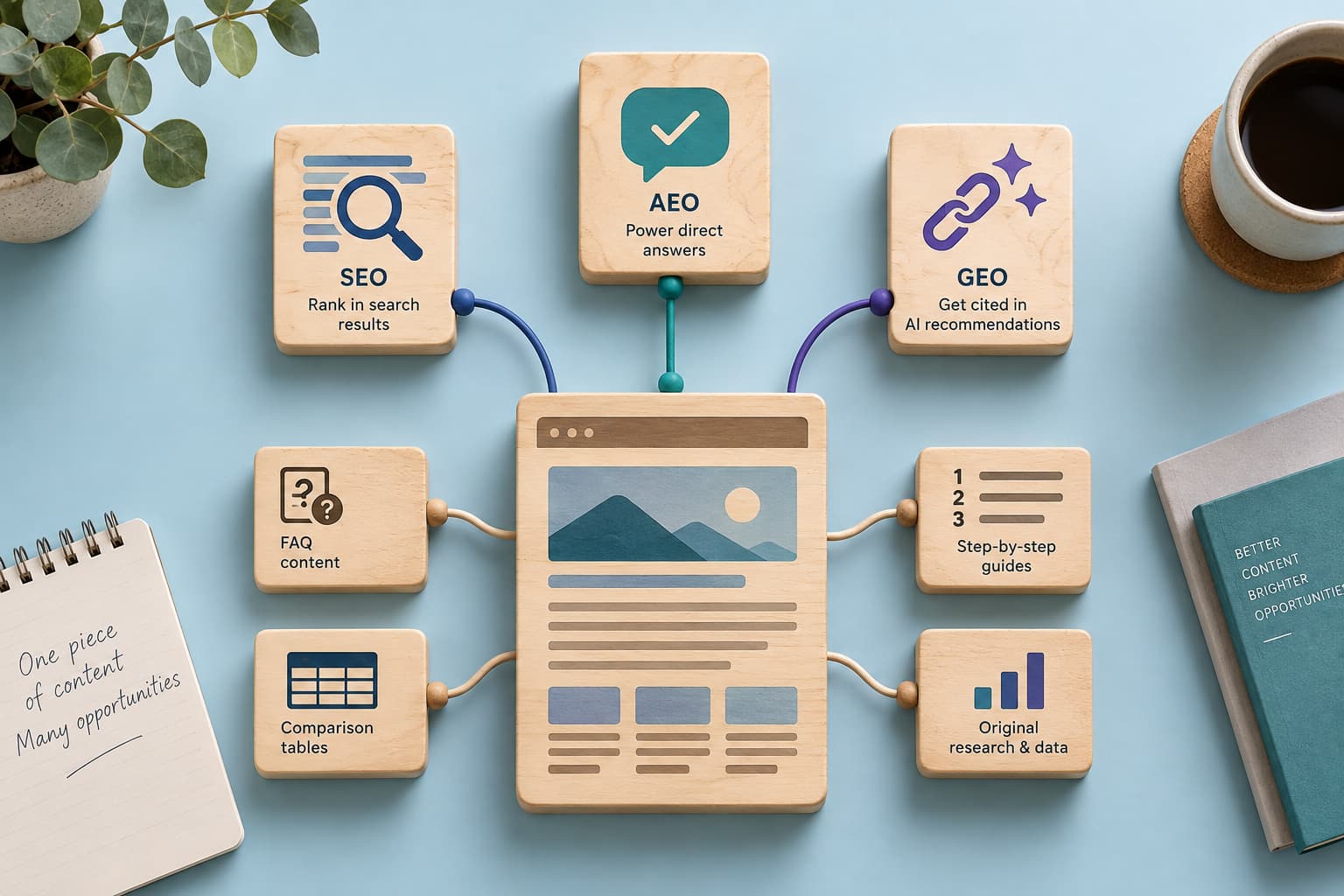
Overview
- This article explains the different types of queries that trigger AI Overviews and how they influence search visibility in today’s AI-driven landscape.
- It breaks down key query patterns such as informational, how-to, comparison, long-tail, and research-based searches, showing why they are more likely to generate AI-powered summaries.
- It also highlights common optimization mistakes businesses make and how aligning content with AEO principles can improve visibility in AI-generated results.
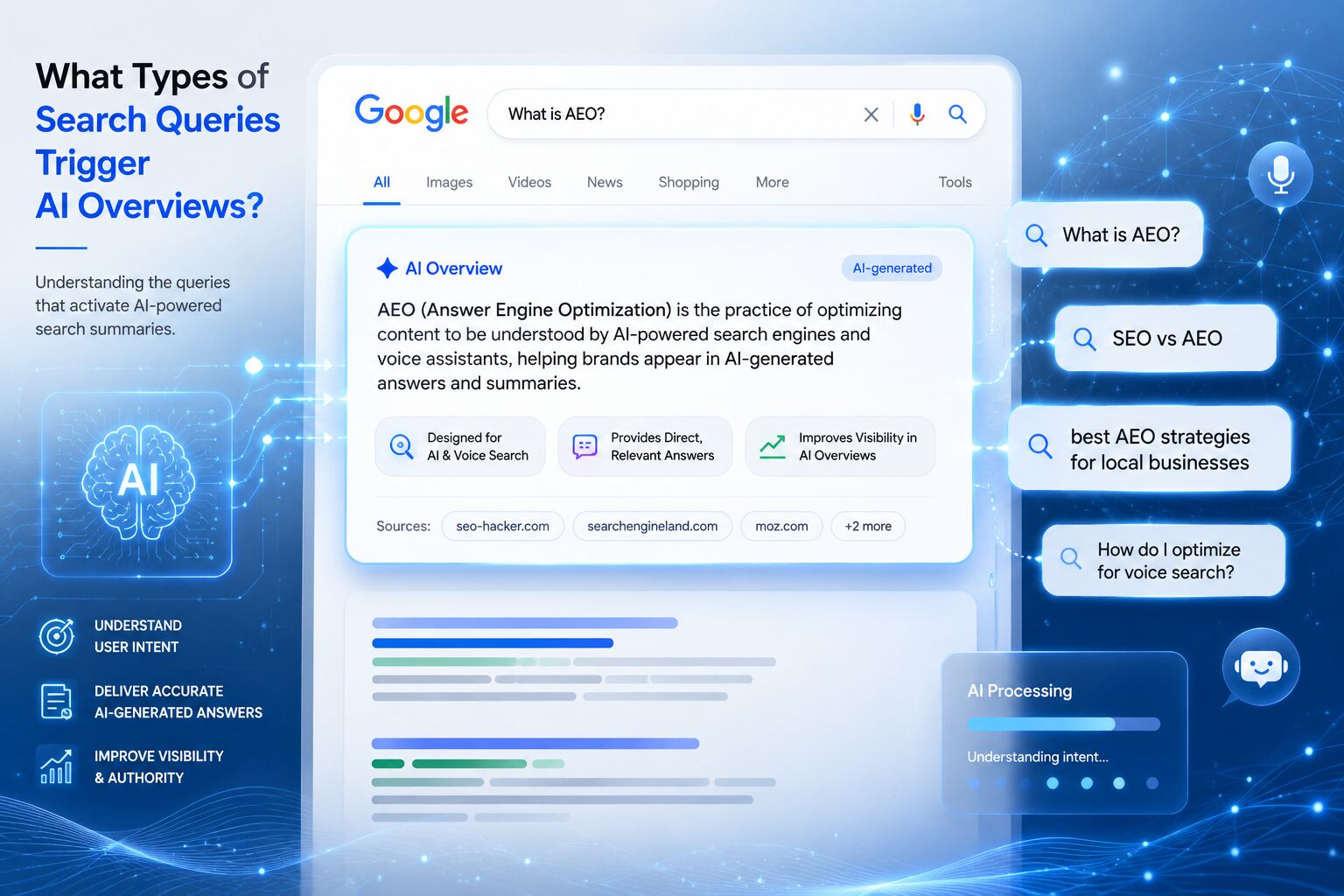
You might notice AI Overviews appearing at the very top of your search results, giving instant, AI-generated answers before you even click a website. These are AI-generated summaries powered by Answer Engine Optimization (AEO), where search engines pull and synthesize information from multiple sources to directly answer your query.
These placements are becoming increasingly important because they shape what you see first and strongly influence how information is consumed in search today. In this article, we will explore the types of queries that trigger AI Overviews and what they mean for your SEO strategy.
At SEO Hacker, our AEO services can help you optimize your content for AI Overviews and improve your chances of ranking where AI-generated answers appear.
Primary Query Types Triggering AI Overviews
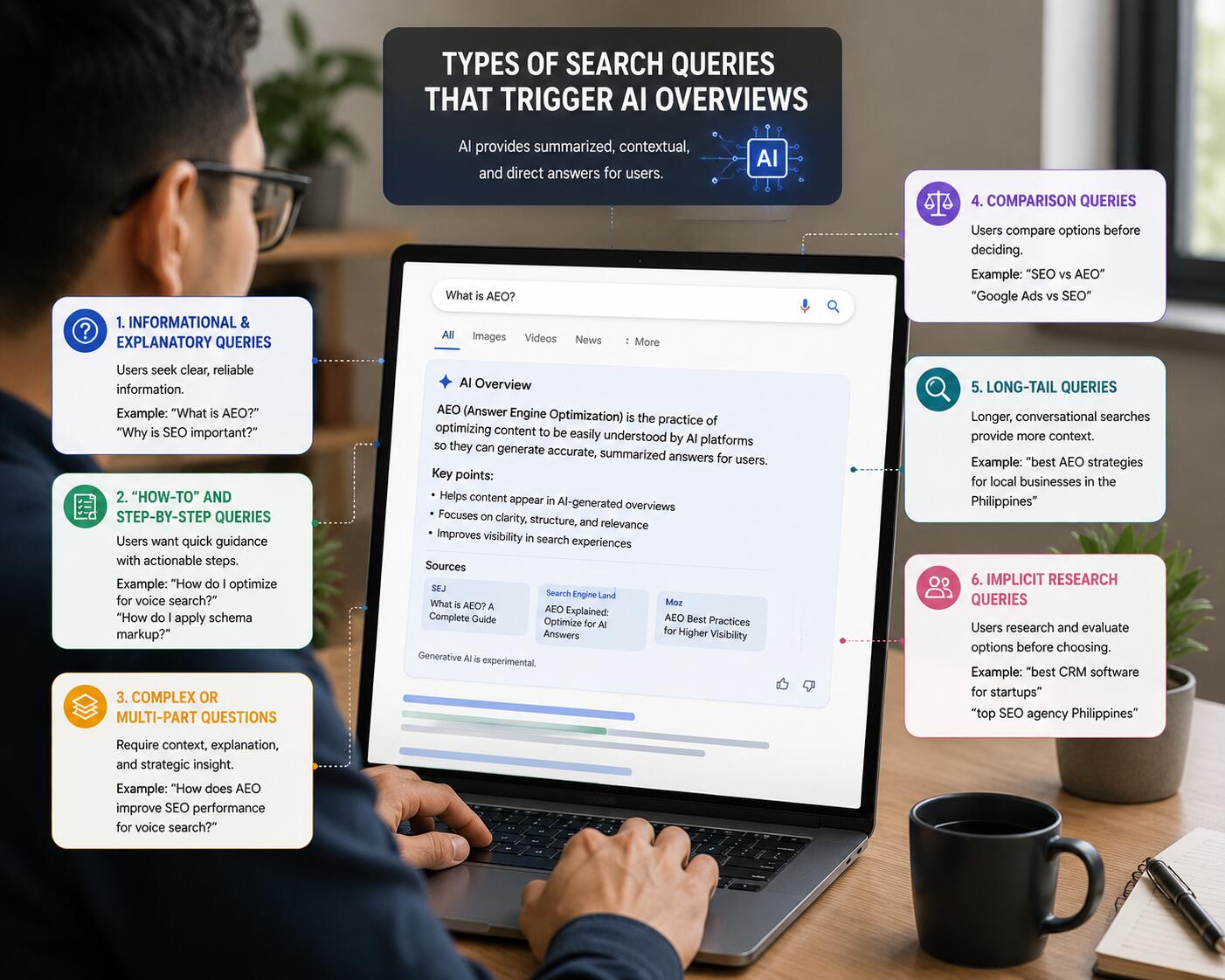
Certain search queries are more likely to trigger AI Overviews because they require summarized, contextual, and direct answers that AI platforms can quickly generate for users.
Informational & Explanatory Queries
Queries such as “What is AEO?” or “Why is SEO important?” indicate that users are seeking clear, reliable information rather than a specific website. AI platforms respond to these searches by pulling concise, authoritative answers from trusted sources and presenting them directly on the results page.
Content that explains topics thoroughly yet remains easy to understand is more likely to be selected, especially when it is logically structured and aligned with user intent.
“How-to” and Step-by-Step Queries
Process-driven searches frequently activate AI Overviews because users want quick guidance they can follow immediately. Questions like “How do I optimize for voice search?” or “How do I apply schema markup?” require structured answers that are broken into actionable steps.
AI systems favor content that presents instructions clearly through numbered lists, short explanations, and organized formatting. Pages that simplify complex tasks into easy-to-follow guidance are more likely to appear in AI-generated summaries, especially when the information directly solves the user’s problem without unnecessary detail.
Complex or Multi-part Questions
Multi-intent queries often trigger AI Overviews because AI platforms combine information from multiple sources into one cohesive response. Searches like “How does AEO improve SEO performance for voice search?” require context, explanation, and strategic insight simultaneously.
Instead of presenting users with multiple links to sort through, AI-generated results aim to summarize the key points immediately. Content that addresses related subtopics comprehensively and connects ideas clearly becomes more valuable in these situations because AI can extract well-rounded answers from it.
Comparison Queries
Users exploring different options often rely on search engines to quickly understand the differences between products, services, or strategies before making a decision. Queries such as “SEO vs AEO” or “Google Ads vs SEO” signal a need for balanced, side-by-side information.
AI platforms often summarize differences, strengths, and use cases directly in search results to help users evaluate options more quickly. Content that uses comparison tables, structured breakdowns, and concise explanations performs well because it makes information easier for AI systems to interpret and present clearly.
Long-Tail Queries
Instead of typing short keywords, users now search using complete phrases such as “best AEO strategies for local businesses in the Philippines.” These searches give AI systems more context about what the user actually wants, allowing them to generate more accurate responses.
Content optimized for long-tail queries tends to perform well because it addresses precise concerns, aligns with conversational search behavior, and provides the depth AI platforms look for when selecting answers.
Implicit Research Queries
Terms such as “best CRM software for startups” or “top SEO agency Philippines” often trigger AI Overviews, as users compare options and seek summarized insights before making a decision.
AI systems interpret these as research-driven searches, enabling them to generate responses that combine recommendations, explanations, and key considerations into a concise overview.
Content with strong authority, relevance, and clarity is more likely to appear, as AI platforms prioritize sources that help users evaluate choices quickly and confidently.
Key Characteristics of AI Overview Queries
AI Overview queries typically share patterns that help AI platforms identify when users need summarized, context-rich, and direct answers.
- Low Transactional Intent: AI Overviews appear more often in informational or research-focused searches than in purchase-driven queries.
- Structured Format: Clear, specific queries help AI generate accurate summaries more effectively.
- Non-Branded Focus: Generic searches are more likely to trigger AI Overviews than brand-specific ones.
- Information Density: Complex queries requiring detailed explanations or multiple insights often generate AI-powered overviews.
Why are AI Overviews Important for Business
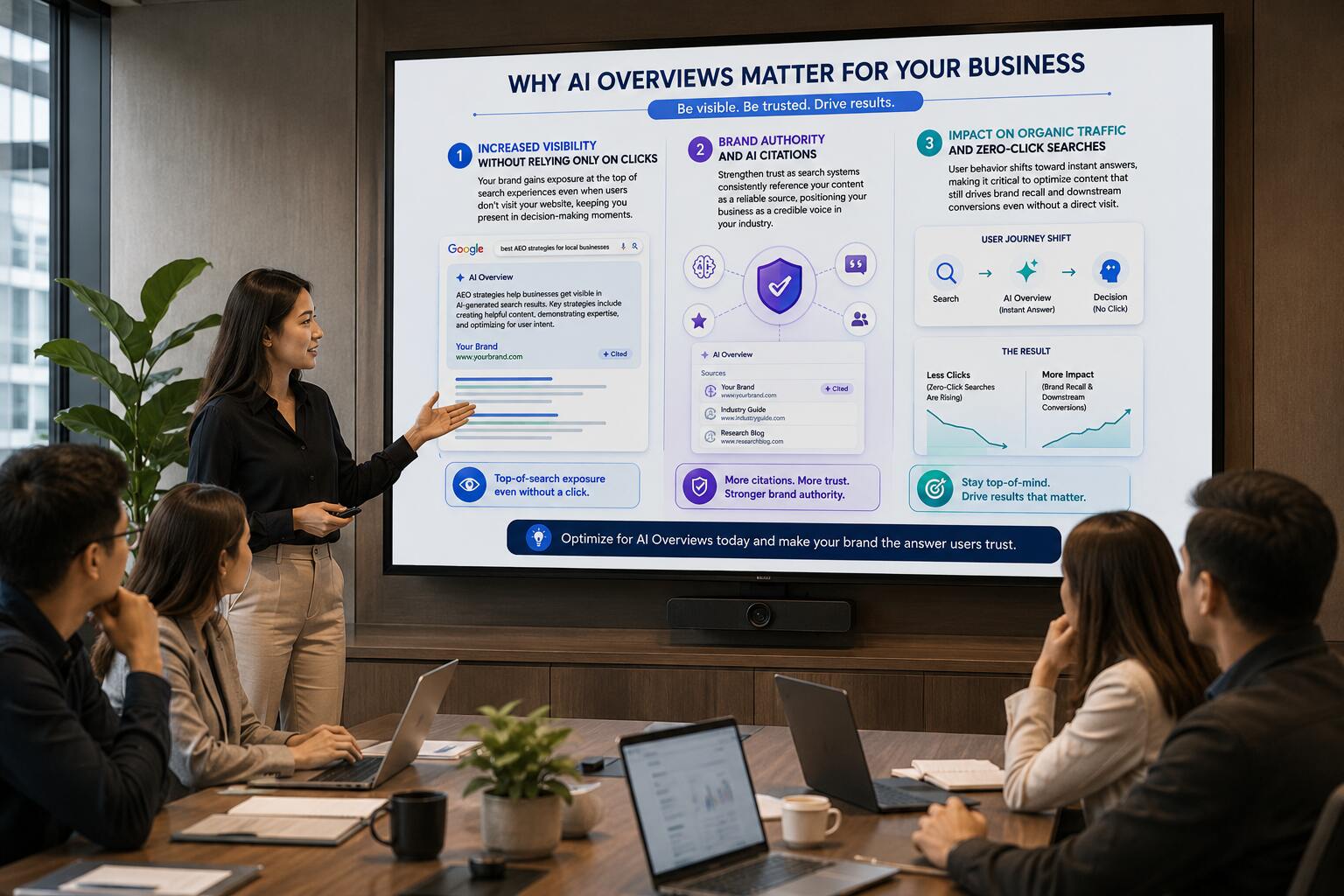
AI Overviews are important for businesses because they reshape how your brand appears in search by positioning your content directly within AI-generated answers that users see first.
Increased Visibility Without Relying Only on Clicks
This means your brand gains exposure at the top of search experiences even when users don’t visit your website, keeping you present in decision-making moments.
Strengthen trust as search systems consistently reference your content as a reliable source, positioning your business as a credible voice in your industry.
Impact on organic traffic and zero-click searches
Shows how user behavior shifts toward instant answers, making it critical for you to optimize content that still drives brand recall and downstream conversions even without a direct visit.
Common Mistakes Businesses Make When Optimizing for AI Overviews
AI Overviews reward clarity, structure, and authority-driven content, yet many businesses still rely on outdated SEO tactics that weaken their visibility rather than strengthen it.
Keyword Stuffing
Keyword stuffing no longer improves visibility in AI-driven search. Repeated keywords reduce clarity, weaken authority, and make content harder for AI systems to interpret. Modern AI Overviews prioritize semantic relevance and user intent, making natural, question-focused content far more effective.
Writing Vague Answers
Content that lacks depth or specificity is less likely to be referenced by AI Overviews. Vague answers fail to fully address user intent, allowing stronger competitors to outperform them. Effective content should provide direct, actionable, and context-rich explanations with clear definitions, examples, and outcomes.
Ignoring Structured Data
Search engines and AI systems use structured signals to understand and categorize content. Without structured data, content becomes harder to interpret, reducing visibility in AI Overviews. Schema markup, clear headings, and organized formatting help systems extract meaning more effectively, improving chances of ranking above less-structured competitors.
Without credibility signals such as expertise, backlinks, and consistent publishing quality, content struggles to compete with established sources. Improving visibility requires well-researched, insightful, and experience-driven content that demonstrates subject-matter authority. Strong brand reputation and content depth help AI systems recognize pages as reliable references.
Key Takeaway
These types of queries trigger AI Overviews when users look for informational, comparison-based, or research-heavy answers that require quick synthesis instead of visiting a single website. When your content aligns with these query types, your chances of being cited in AI Overviews increase significantly, even in zero-click search environments.
If you want your brand to consistently appear in AI Overviews and strengthen its visibility in AI-driven search, SEO Hacker’s AEO services can help you create optimized, authoritative, and structured content built for this new search behavior. Contact us today and let’s future-proof your AEO strategy.