Overview
Table of Contents Hide
- As search shifts toward direct AI answers, businesses must adopt Generative Engine Optimization (GEO) alongside traditional SEO.
- GEO secures brand visibility by earning citations in AI-generated summaries.
- To succeed, brands must optimize for conversational queries, structure clear factual content, build verifiable authority through data, and cover topics comprehensively.
AI-powered search is rapidly changing how people discover information. With ChatGPT reaching 100 million users faster than any app in history and Google AI Overviews now serving billions of users each month, more people are turning to AI for direct answers instead of browsing multiple search results. As this shift continues, businesses need to adapt their digital strategies to remain visible in an increasingly AI-driven search landscape.
At SEO Hacker, we help your brand adapt to the evolving search landscape with forward-thinking strategies. Part of that means helping you understand what Generative Engine Optimization (GEO) is, how it builds on traditional SEO practices, and why it is essential for driving visibility as AI changes the way audiences find answers online.
What is Generative Engine Optimization (GEO)
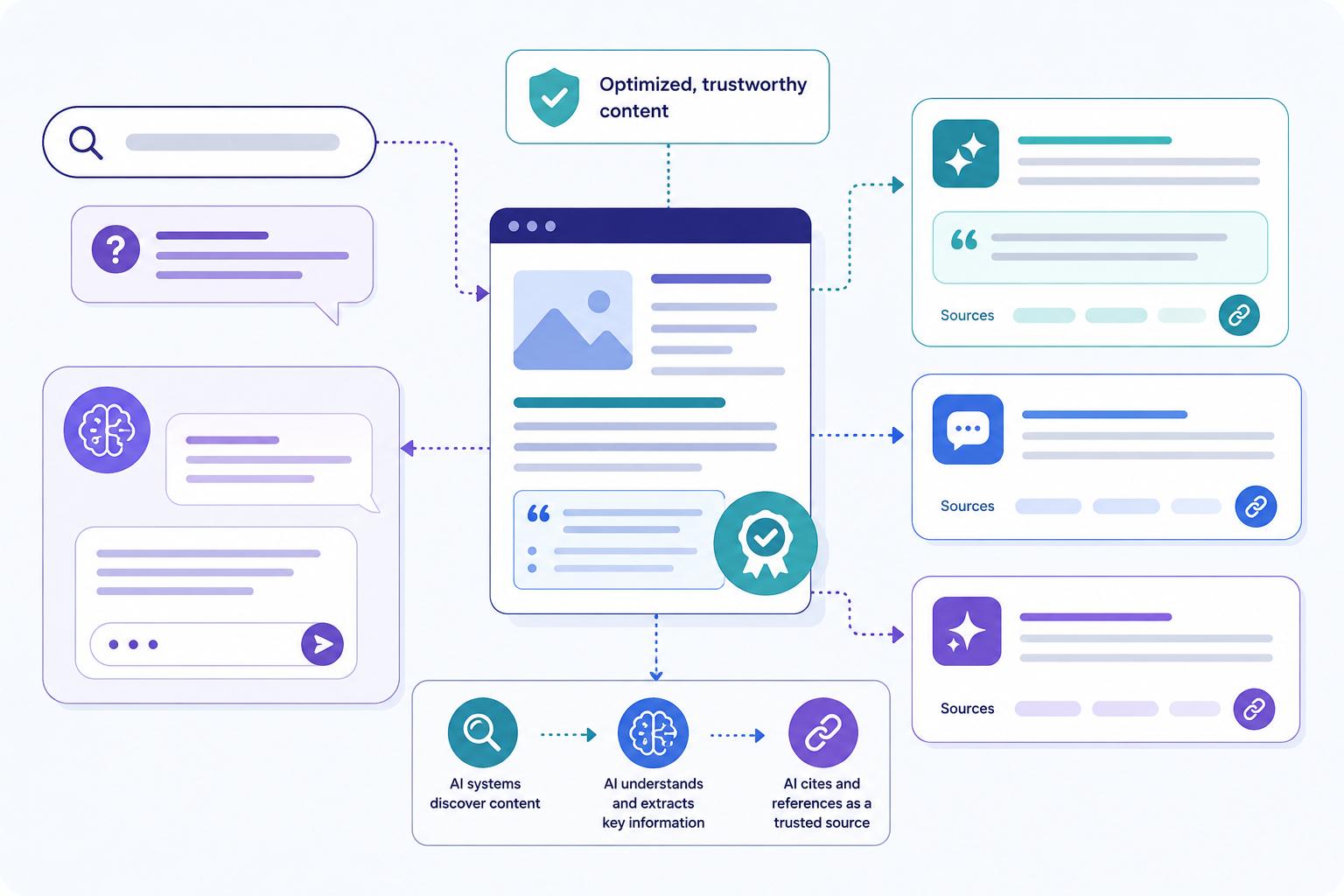
Generative Engine Optimization (GEO) is the process of optimizing content for AI-generated answers across platforms like ChatGPT, Perplexity, and Google AI Overviews. It helps brands appear as trusted sources in conversational search results, not just on standard search engine results pages.
GEO vs. Traditional SEO
As AI-powered search evolves, understanding the distinctions between Traditional SEO and GEO is essential for developing an effective search visibility strategy.
| Metric / Focus | Traditional SEO | Generative Engine Optimization (GEO) |
|---|---|---|
| Primary Goal | Achieve higher rankings on Search Engine Results Pages (SERPs) | Increase brand visibility through citations and mentions in AI-generated responses |
| User Interaction | Encourage users to click through to website pages | Provide complete, trustworthy answers directly within AI-generated responses while increasing brand exposure |
| Optimization Strategy | Optimize keywords, backlinks, technical SEO, and on-page content | Build topical authority through comprehensive content, entity optimization, structured data, and contextual relevance |
| Success Metrics | Organic traffic, keyword rankings, click-through rate (CTR), and conversions | Share of Model (SoM), AI citations, brand mentions, sentiment, and inclusion in AI-generated answers |
Core Strategies for GEO
GEO optimizes your content so modern search systems can effortlessly process, validate, and reference your brand as a primary source. Implementing a few core strategies ensures your information gains maximum reach across conversational and generative search tools:
Conversational, Question-Based Keywords
Instead of focusing only on short, traditional keywords, you should optimize your content around the actual questions your audience asks. Generative AI platforms are designed to understand natural language, so they often respond to conversational searches such as “How does SEO improve AI visibility?” or “What is Generative Engine Optimization?”
Building content around these types of questions helps your pages align with how people interact with AI-powered search.
You can do this by researching common customer questions, using question-based headings, and providing direct answers before expanding on the topic. This structure makes your content easier for AI systems to interpret while also improving readability for users looking for quick, accurate information.
Prioritize Factual Clarity & Structure
Clear and well-organized content helps AI systems quickly identify the information needed to answer a user’s question. Rather than presenting long introductions or large blocks of text, organize your content into logical sections with descriptive headings, concise paragraphs, and straightforward explanations.
Start each section by answering the main question first, then provide supporting details and examples. Use bullet points or numbered lists whenever they improve readability. A well-structured page reduces ambiguity, making it easier for AI to extract accurate information and increasing the likelihood that your content will be selected as a reliable source in AI-generated responses.
Build Verifiable Authority
Generative search models prioritize content backed by verifiable proof, primary data, and expert insight. Research analyzing 10,000 real-world queries reveals that incorporating statistics and expert quotes boosts visibility in generated answers by 30% to 40%.
Building this level of authority requires both internal depth and external validation. Structuring articles into interconnected topic clusters demonstrates comprehensive subject expertise, while maintaining consistent facts across every page prevents conflicting signals. Pairing this internal architecture with credible third-party mentions and expert citations ensures search tools recognize your brand as a primary, trustworthy reference.
Answer Follow-up Questions
Users rarely stop after asking a single question, and AI systems are designed to anticipate what they might ask next. Instead of answering only the primary query, expand your content to address related questions that naturally follow.
Addressing a core topic from every angle establishes a complete, high-value resource. Explaining what GEO is naturally leads into comparing it with traditional SEO, detailing its business impact, outlining its underlying mechanics, and sharing actionable optimization tactics. Eliminating these information gaps creates a seamless experience for readers.
Comprehensive coverage signals to search systems that your page serves as an all-in-one authority. When engine algorithms encounter well-rounded content, they are far more likely to extract and cite your work for complex, multi-part user queries.
Where GEO Matters
Understanding where generative models source their information helps tailor content for maximum reach. The primary platforms relying on these optimization practices fall into two main categories:
Hybrid Search Engines
Search platforms combining traditional web indices with generative models draw on authoritative content to populate answer snapshots and summaries. Optimizing for source credibility ensures your pages feed directly into these hybrid search results.
Standalone AI Assistants
Direct-answer conversational tools extract insights from top-tier online sources to formulate real-time answers. Authoritative, highly structured content increases the probability of being cited as a primary reference in these responses.
Common GEO Mistakes
Here are the common mistakes that reduce your content’s chances of being understood and referenced by generative AI systems.
Keyword Stuffing
AI models evaluate meaning and context, not keyword density. Excessive repetition doesn’t improve relevance; it degrades readability, signals low quality, and can trigger spam filters that remove your content from consideration entirely.
Thin Content
Pages that only skim a topic give AI little to work with. Without supporting detail, examples, or context, AI systems have no substantial material to extract or cite, and thin content signals a lack of expertise compared to more comprehensive competitor resources.
Weak Site Structure
Disorganized navigation and unclear internal linking obscure how your pages relate to each other, making it harder for AI to discover and fully understand your content. Even strong pages risk being overlooked if they’re difficult to reach.
Missing Schema
Without structured markup, AI is left to infer context from surrounding text alone, increasing the risk of misclassification. This is especially costly for FAQs, reviews, and product pages, where schema directly shapes how AI parses information.
Poor Intent Alignment
Content that doesn’t directly answer the user’s actual question leads to higher bounce rates and weaker relevance scores. AI favors pages that clearly resolve the query, not just ones that mention the target keyword.
Low-Quality Backlinks
Links from spammy or irrelevant sites erode trust signals rather than build them. Backlinks from reputable, relevant sources carry far more weight in how confidently AI cites your brand.
Key Takeaway
If you’ve been asking, “What is Generative Engine Optimization?” the answer goes beyond optimizing for traditional search rankings. GEO focuses on helping your content become a trusted source that AI systems can understand, reference, and surface in generated responses.
Combining SEO with GEO ensures your brand stays visible across traditional search results and generative platforms. SEO Hacker builds integrated strategies—combining technical performance, content optimization, and authority signals—to future-proof your search presence.
Contact us today to strengthen your visibility across all search channels.