Overview
Table of Contents Hide
- This article explains the key differences between SEO and AEO as search evolves from traditional rankings to AI-driven, answer-focused results.
- It compares SEO’s focus on website visibility through rankings with AEO’s role in optimizing content for direct selection by AI tools, voice assistants, and featured snippets.
For years, search visibility has been driven primarily by traditional Search Engine Optimization (SEO), where rankings on search engine results pages determined how audiences discovered content. However, with the rise of AI-powered search and generative answers, the landscape is shifting beyond rankings alone, changing how information is surfaced and consumed.
To adapt to this shift, it is important to understand Answer Engine Optimization (AEO) and how it works alongside traditional SEO. This article breaks down the key differences between SEO and AEO and what it means for your search strategy moving forward.
To master both effectively, partnering with SEO Hacker helps you combine proven SEO strategies with advanced AEO optimization for stronger visibility across search engines and AI-driven platforms.
What is SEO?
Improving your website to rank higher on search engines like Google is what SEO is all about, making it easier for your target audience to find you when they’re actively searching for solutions.
It involves optimizing your content, keywords, website structure, and authority signals such as backlinks to ensure your pages appear in relevant search results.
What is AEO?
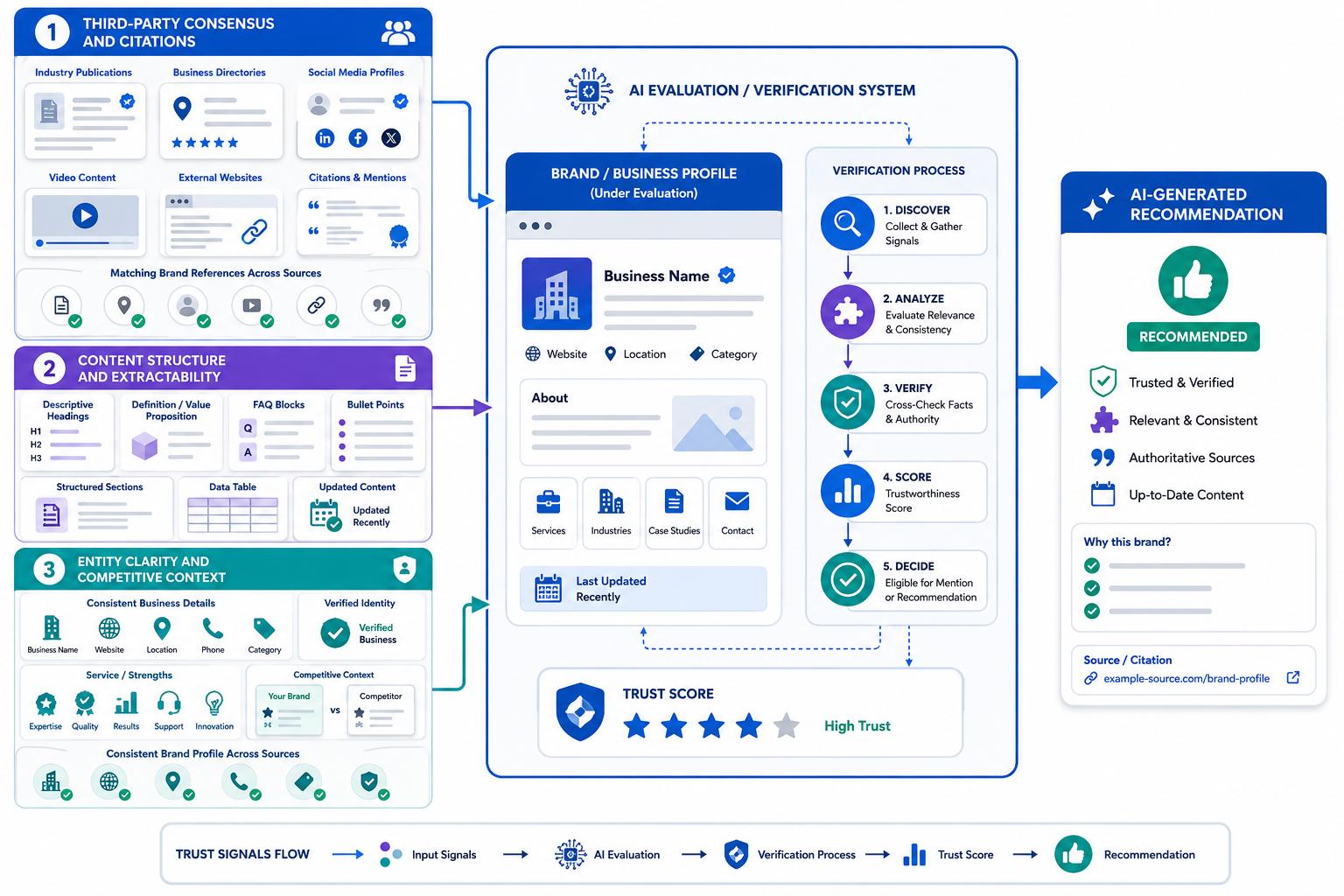
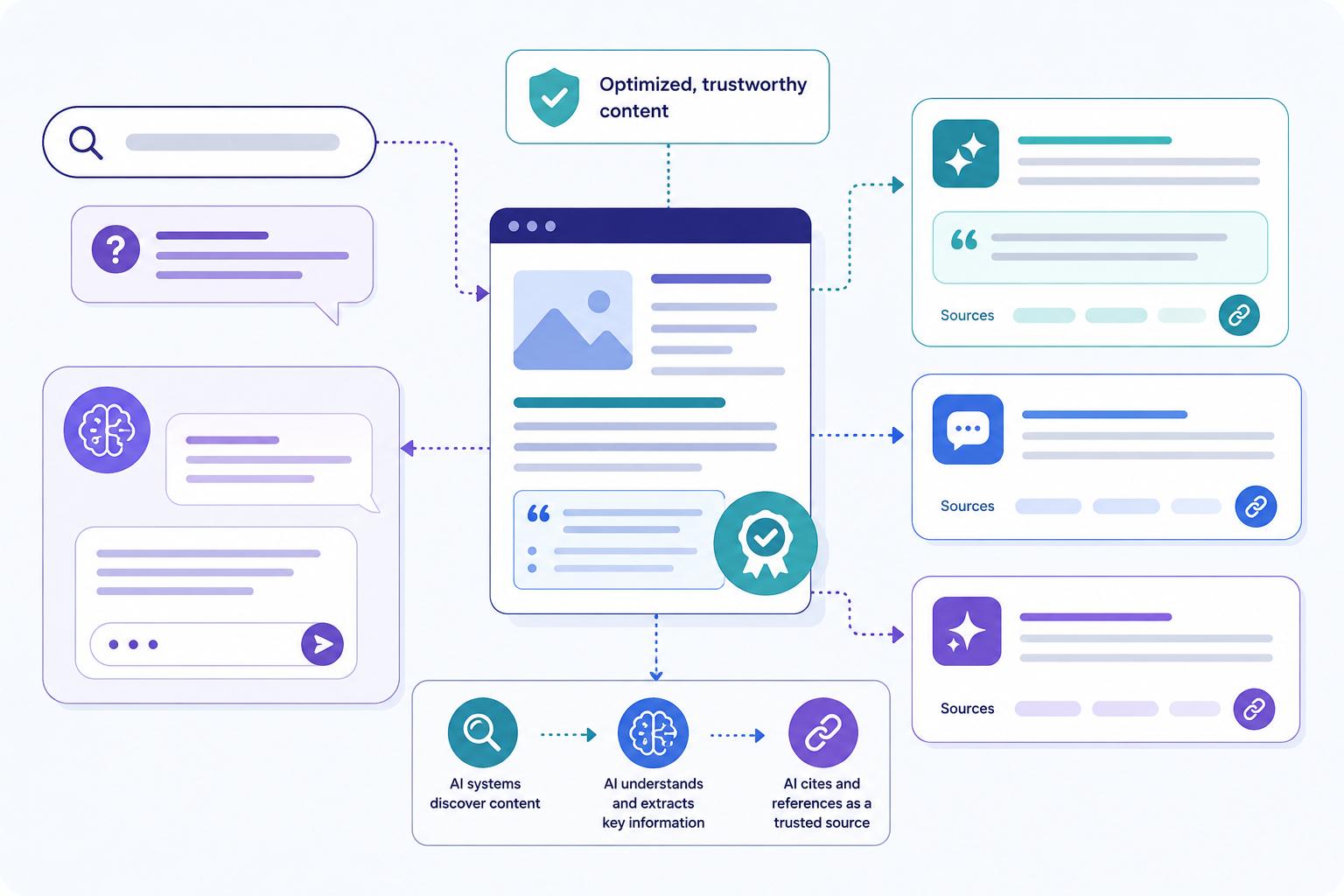
AEO focuses on structuring your content so it can be selected as the direct answer by AI-driven platforms, voice assistants, and search engines.
Instead of relying only on rankings and clicks, AEO ensures your content is clear, concise, and easy for machines to understand and present instantly to users.
Key Differences Between SEO and AEO
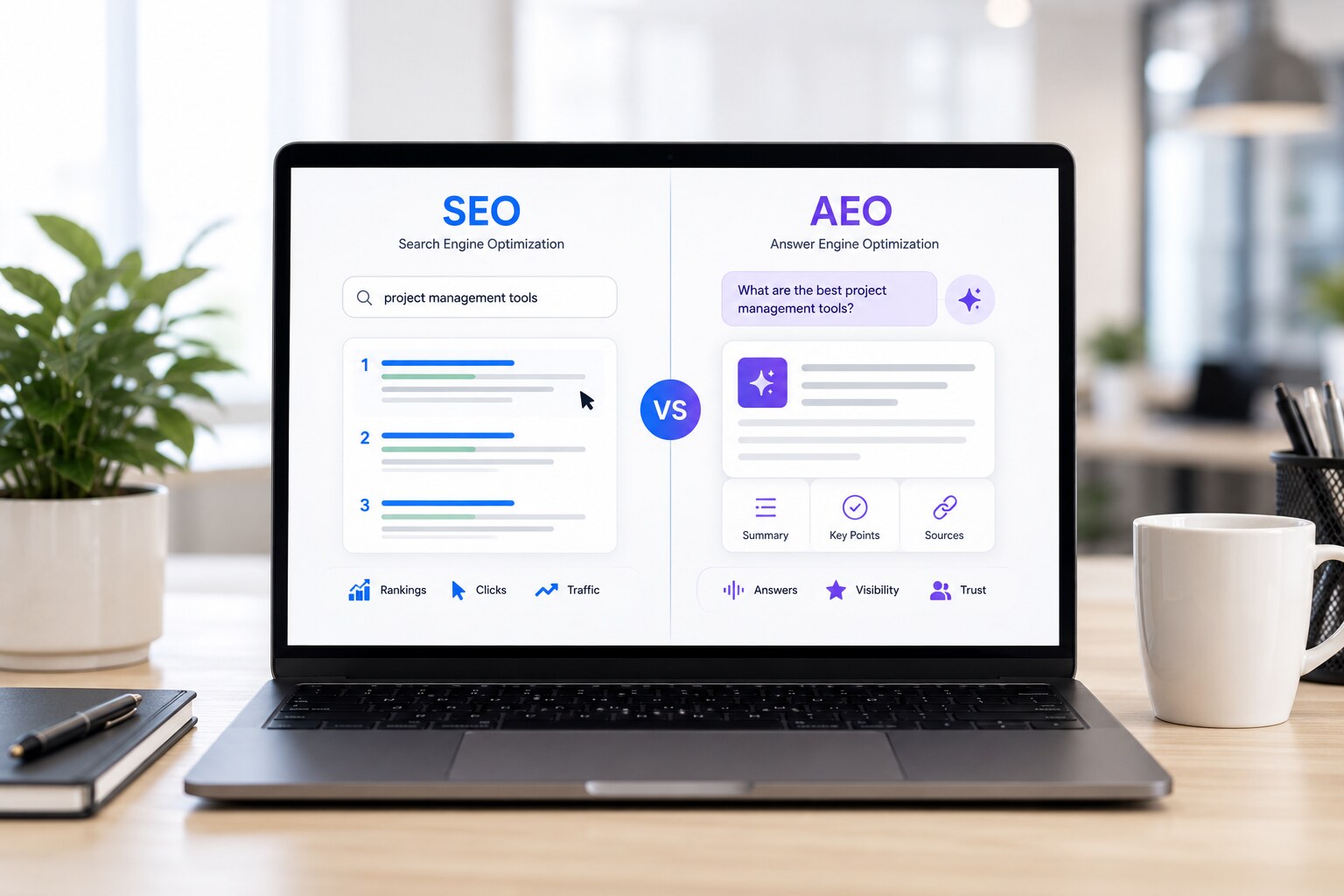
This table summarizes everything you need to know about the main differences in search optimization strategies.
| Aspect | SEO | AEO |
|---|---|---|
| Primary Goal | Rank higher on search engine results pages (SERPs) to drive website traffic | Be selected as the direct answer in AI-driven results, voice search, and featured snippets |
| Platform Focus | Traditional search engines like Google | AI platforms, voice assistants, and answer engines |
| Content Style | In-depth, keyword-optimized, long-form content designed to rank | Concise, structured, and answer-focused content designed for quick extraction |
| Metrics for Success | Rankings, organic traffic, click-through rates (CTR), conversions | Answer visibility, featured snippet placements, AI citations, and zero-click presence |
| Key Strategies | Keyword research, backlink building, technical SEO, and content optimization | Structured data (schema), Q&A formatting, conversational content, clarity and context optimization |
How SEO and AEO Work Together?
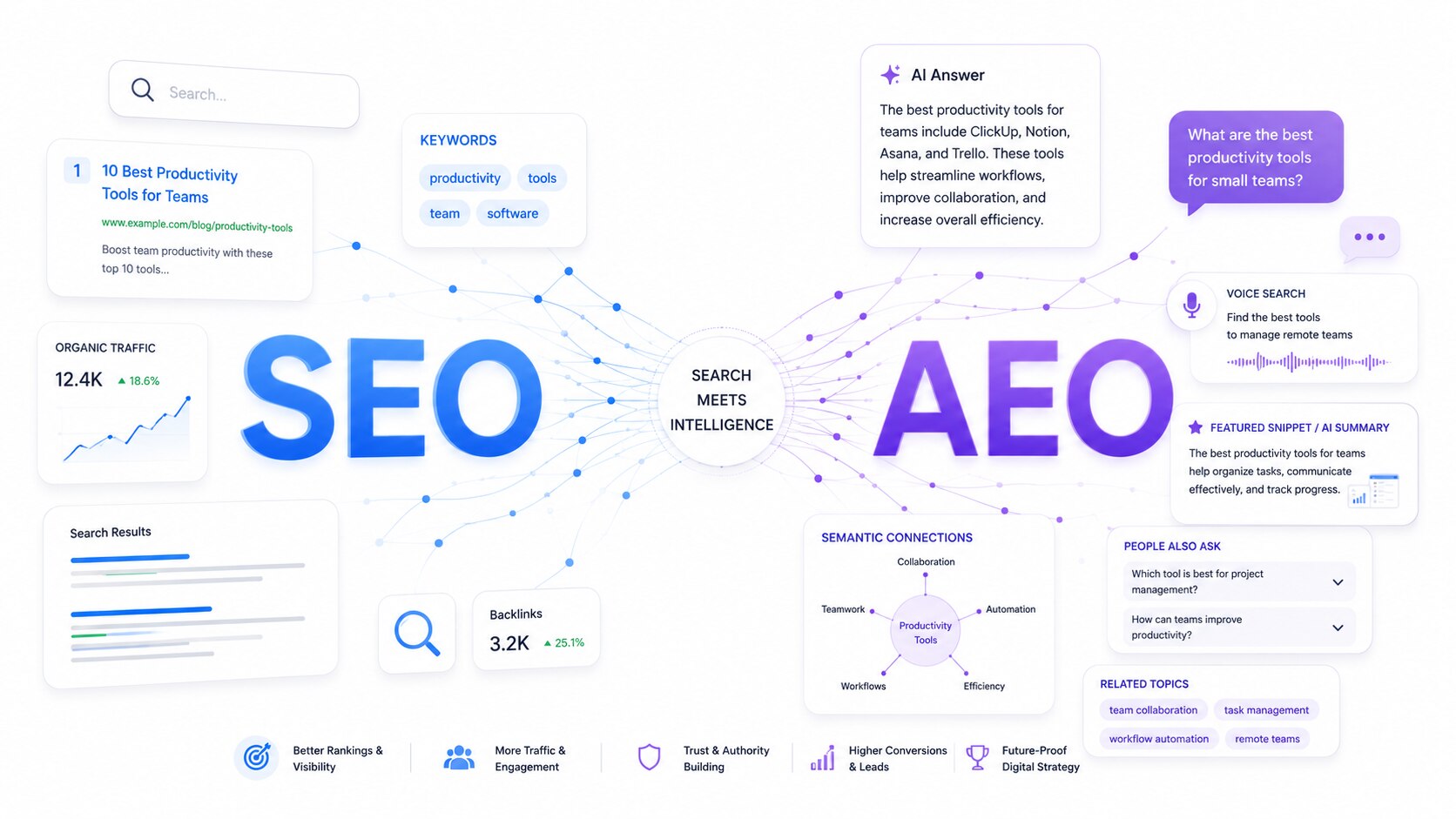
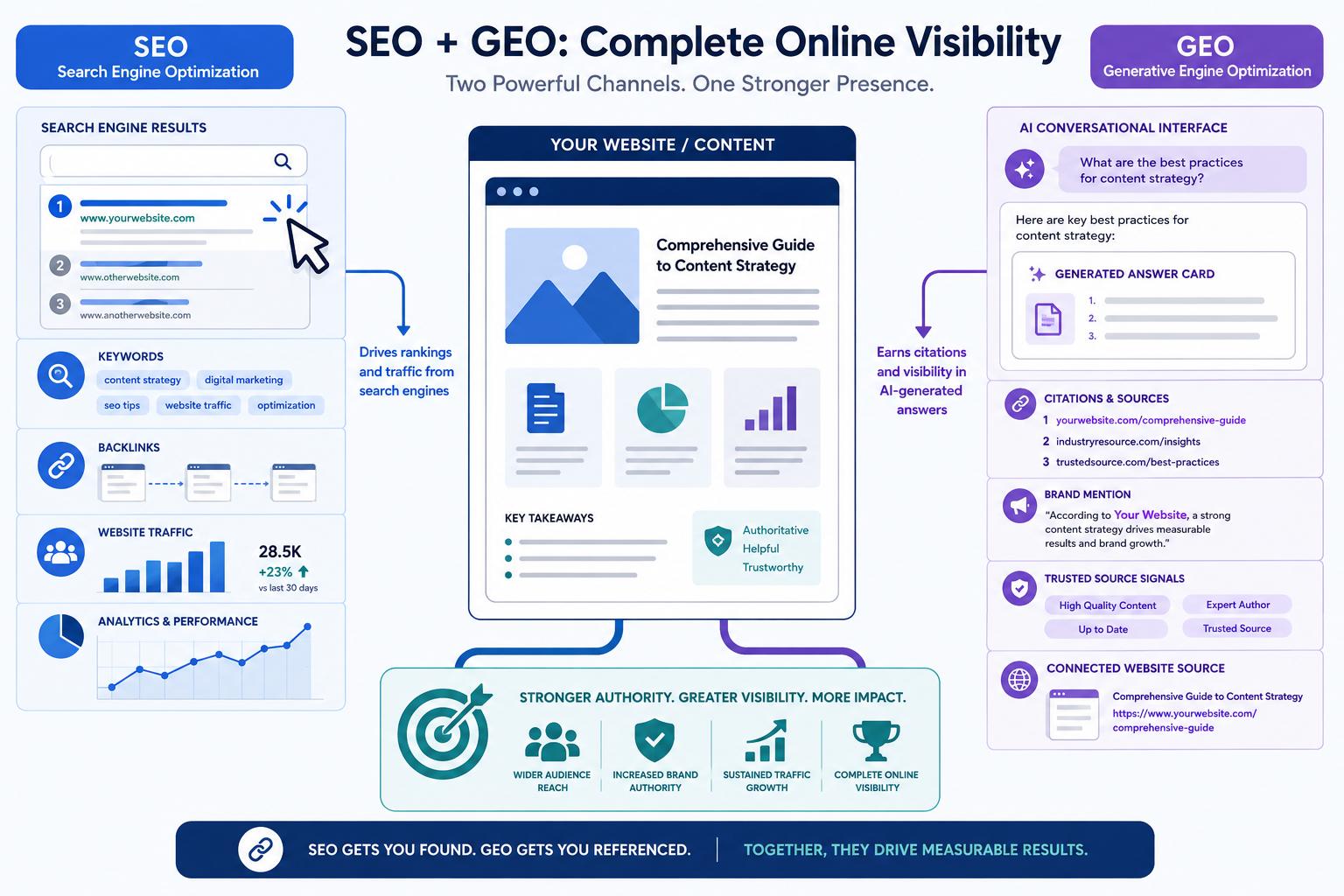
SEO improves rankings through keywords, technical optimization, and authority, while AEO structures content for direct use in AI-generated answers, featured snippets, and voice search. Together, they expand visibility across modern search platforms.
What Types of Content Perform Best for Each?
Different content types support SEO and AEO in distinct ways, depending on whether your goal is to rank or to be selected as the answer.
| Strategy | Best Content Types | Purpose |
|---|---|---|
| SEO | Blogs | Target relevant keywords, provide in-depth information, improve rankings, and drive organic traffic. |
| Landing Pages | Optimize for specific services or offers to convert search traffic into leads or customers. | |
| Pillar Content | Build topical authority through comprehensive coverage and support internal linking. | |
| AEO | FAQs | Structure common questions and answers for easy AI extraction and presentation. |
| How-To Guides | Deliver step-by-step answers aligned with voice search and answer-focused queries. | |
| Definitions | Provide concise explanations ideal for featured snippets and AI-generated responses. | |
| Quick Answers | Offer short, direct responses that improve chances of answer selection. |
How Do You Optimize for Both SEO and AEO?
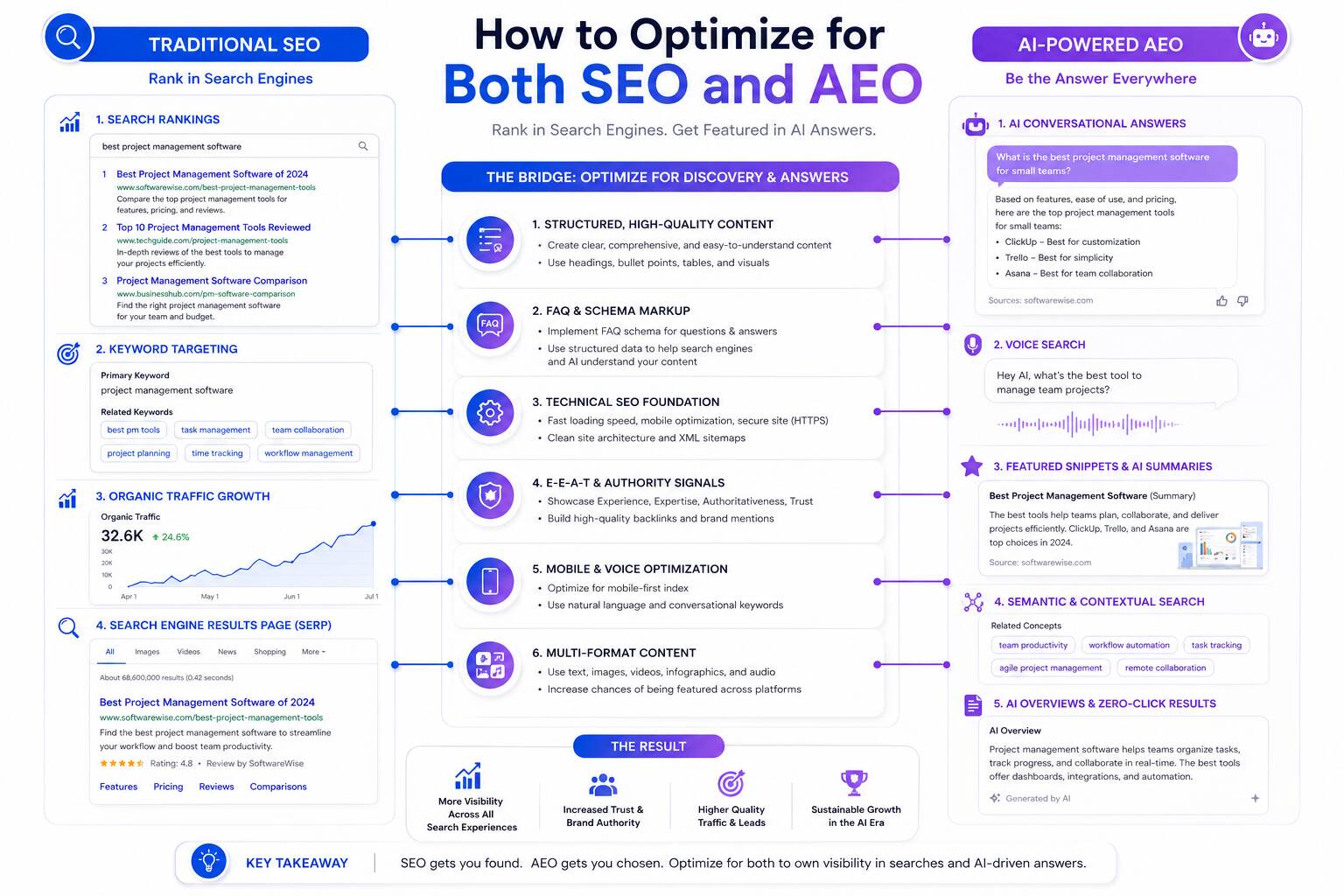
Optimizing for both SEO and AEO requires a strategy that balances strong search visibility with content designed for direct answer extraction by AI systems.
Answer-First Content Structure
Placing clear and direct answers at the beginning of your content allows search engines and AI platforms to quickly identify relevance and intent. When key questions are addressed upfront, pages are more likely to appear in featured snippets, voice search responses, and AI-generated results.
It also enhances user experience by helping visitors immediately find the information they need while still guiding them toward more detailed explanations within the same page. Over time, this improves visibility across both traditional search rankings and AI-driven answer surfaces.
Target Conversational and Question-Based Keywords
Focusing on how users naturally phrase their searches allows your content to align more effectively with both traditional search queries and AI-driven interactions. Instead of relying solely on short-tail keywords, you incorporate full questions and conversational phrases that reflect real search intent.
This approach improves your ability to rank for long-tail queries while also increasing the likelihood of being surfaced by AI systems that prioritize natural language understanding. As search behavior becomes more conversational, this strategy ensures sustained relevance across evolving search platforms.
Leverage Structured Data (Schema Markup)
Using structured data gives search engines and AI systems clear context about your content’s purpose. Marking up elements like FAQs, how-to guides, and articles helps machines understand not just the text, but its meaning.
This improves your eligibility for rich results, featured snippets, and AI-generated responses. With clearer signals in place, your content becomes easier to interpret, which supports both higher rankings and stronger online visibility in answer-based search environments.
Establish Brand Authority & Trust (E-E-A-T)
Building credibility through accurate, well-researched, and consistent content strengthens how both search engines and AI platforms evaluate your site. When you demonstrate expertise and reliability, your pages are more likely to rank for competitive topics and be selected as trusted answers.
Including verified information, clear explanations, and consistent messaging reinforces your authority. This not only improves your current performance but also positions your brand as a dependable source as AI becomes more selective about what it recommends.
Ensure Content Accessibility & Technical SEO
A well-optimized website ensures that both users and AI systems can easily access and understand your content. Fast-loading pages, mobile responsiveness, clean site structure, and proper indexing all contribute to better crawlability and usability.
When your technical foundation is strong, your content is more likely to be processed correctly and surfaced in search results. This supports both SEO rankings and AEO visibility, ensuring your pages perform consistently across different platforms.
Create Multi-Format Content
Combining paragraphs, bullet points, tables, and FAQs allows different types of queries to be answered effectively. Some users prefer detailed explanations, while others look for quick answers, and AI platforms extract both depending on context.
When you offer flexible content formats, you improve engagement, expand your reach, and increase the chances of your content being selected across various search experiences.
Key Takeaway
Organic rankings improve visibility through authority and relevance, while answer inclusions focus on delivering direct responses in snippets and AI-driven search results.
These highlight the key differences between SEO and AEO, where SEO builds long-term search presence while AEO focuses on instant, query-based visibility.
Partner with SEO Hacker to strengthen both strategies through a unified approach that combines technical SEO and advanced AEO optimization.